
Guinea-Bissau votes as president seeks second term
In the politically unstable West African coastal country of Guinea-Bissau people headed to the polls. Cocaine trafficking, power games, exlusion of the main opposition party and a president whose term has expired, it's seen as one of the most contentious votes in recent history.
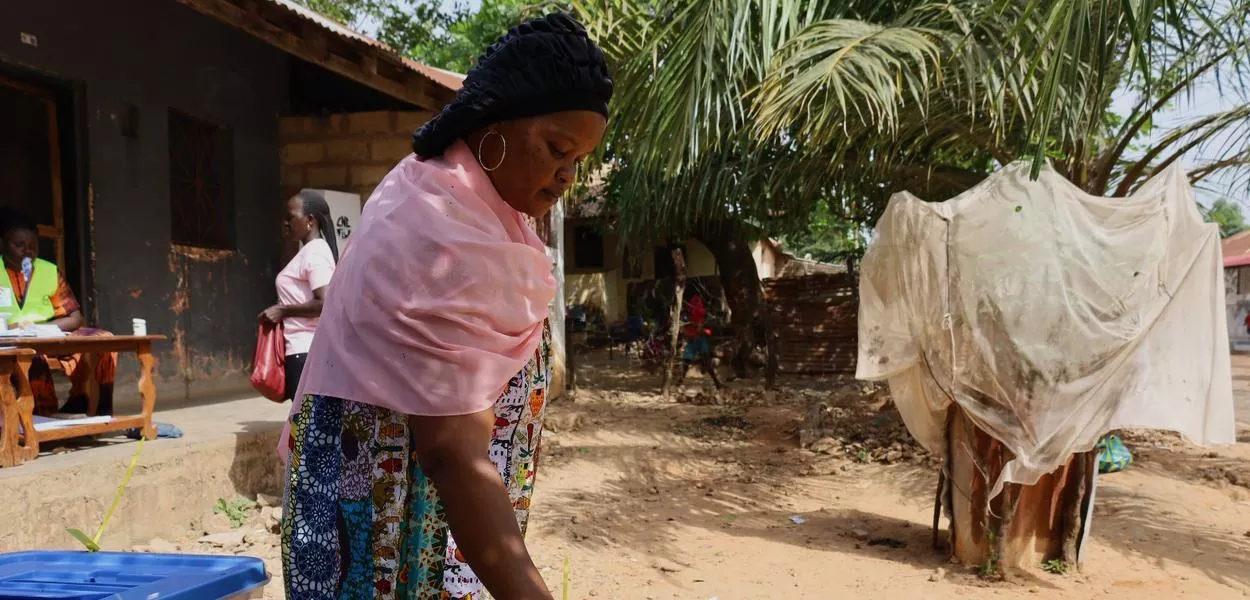
Bissau (AP/dpa) - Guinea-Bissau, a West African coastal state plagued by coups and known as a cocaine hub, is electing a president and parliament. The elections come at a critical time in West Africa, where democracy has recently been challenged by disputed elections that analysts say could embolden militaries that have forcefully taken power in several countries.
Incumbent Umaro Sissoco Embaló (53), a former army general who first came to power in 2021, is running for re-election, dissolved parliament almost two years ago after what he described as an attempted coup. The presidential election is also taking place a year later than originally scheduled.
Embaló's term of office expired months ago – in February, according to the opposition, and in September, according to the Supreme Court. The main opposition party, which has held a parliamentary majority for years, is excluded from the election. Instead, it is supporting independent candidate Fernando Dias, who is considered the most promising of Embaló's eleven opponents.
Contentious election
It is seen as one of the most contentious votes in recent history because of the exclusion of the main opposition party. “The democracy we knew ... is no longer the model we are experiencing; we are experiencing a model defined by a single person,” said political analyst Augusto Nansambe.
Nearly half the country’s population of 2.2 million citizens are registered to vote. The election on Sunday initially proceeded without incident. According to eyewitnesses, a particularly large number of young people turned out to vote. If none of the candidates receives more than 50 per cent of the votes, there will be a runoff election. Results are expected within a few days.
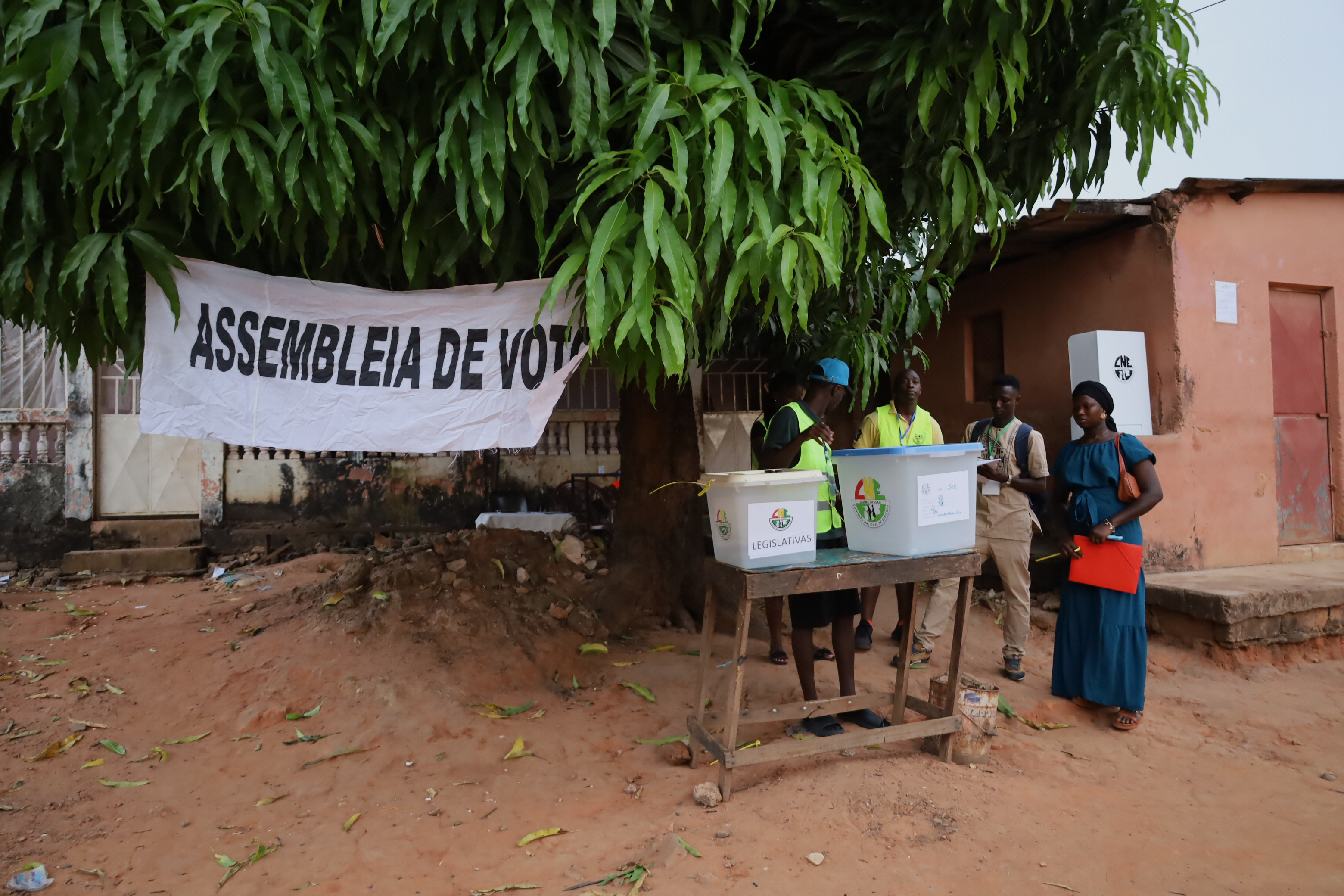
Embalo pitches infrastructure while challenger promises stability
The election campaign was marked by accusations of hate speech, murder and corruption from the different candidates — a trend that could throw the country into crisis, according to Denise dos Santos Indeque, coordinator of the West Africa Network for Peacebuilding in Guinea-Bissau.
Embalo hinged his campaign on infrastructural development, including road construction and the modernization of the country's main airport.
Dias, on the other hand, promised to promote stability, freedoms and security. He accused Embalo's government of “systematic” human rights violations, urging people to “vote for change, for national unity, for reconciliation, for peace, and for an end to the authoritarian regime in Guinea-Bissau.”
In the capital of Bissau, resident Marinho Insoldé expressed optimism the election outcome would improve conditions. “I hope that these elections will bring peace and tranquility so that there is no more hunger,” said Insoldé.
Agriculture finances the citizens – cocaine economy finances the elites
With a population of around 2.2 million and an area roughly equivalent to that of Switzerland, Guinea-Bissau is one of the poorest countries in the world. Although the Atlantic coastal country has mineral resources such as gold, gas and bauxite, agriculture is considered its largest source of foreign exchange. The small tropical country has experienced several coups or coup attempts since its independence from Portugal in 1974. The military is heavily involved in politics.
The country also has a reputation as a hub for cocaine smuggling between Latin America and Europe. The NGO Global Initiative Against Transnational Organised Crime recently described the sector there as more profitable than ever before. ‘The cocaine economy is inextricably linked to the Machiavellian politics of the tiny West African state,’ the experts wrote in a recent report.
The 53-year-old former general Embaló, who was also prime minister from 2016 to 2018, won the presidential election at the end of 2019 with just under 54 per cent of the vote. Critics accuse him of restricting opposition figures, journalists and human rights activists. At the same time, however, political conditions are still considered freer than in several other democratic states in the region.