
Leftist Lee Jae Myung is new president of South Korea, here's what to know
Lee Jae Myung took office as the new president of South Korea on Wednesday, ushering in a political change of direction and return to normalcy after a months-long crisis. Now, big challenges await him.
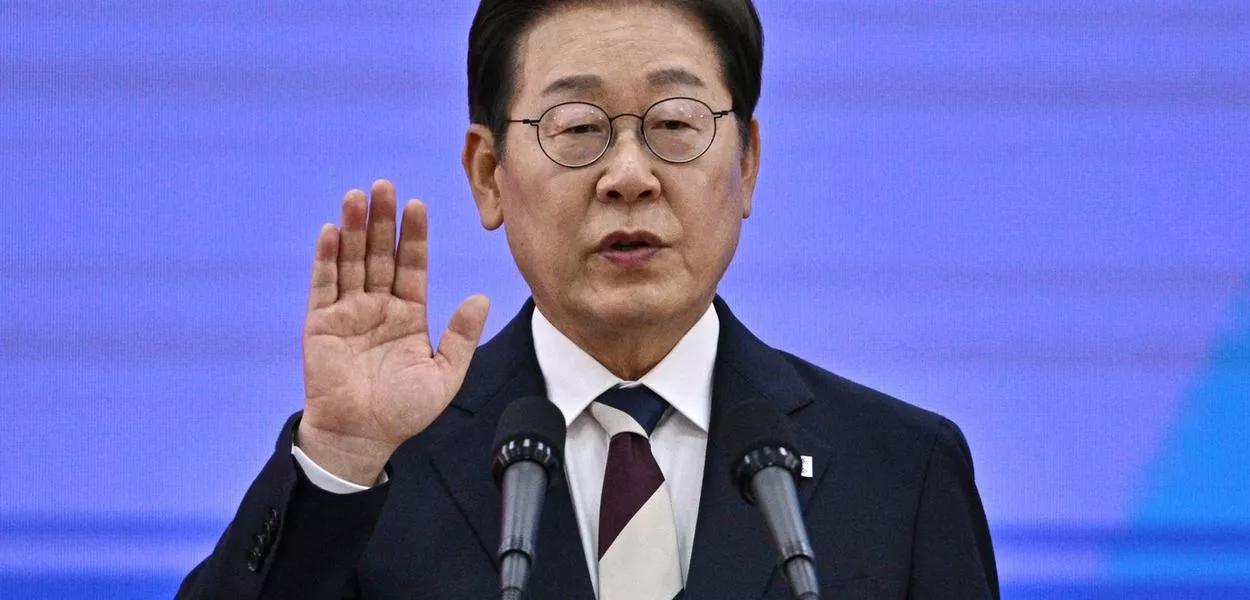
Left-wing candidate Lee Jae Myung has won the presidential election in South Korea, with conservative rival Kim Moon Soo conceding defeat, Yonhap news agency reported on Tuesday. Here's what to know.
With Lee, South Koreans have voted for a political change of direction. Lee comes from the left-wing opposition camp and is a rival of the conservative former president Yoon Suk Yeol, who plunged the East Asian country into a crisis lasting for months at the end of 2024.
The early re-election of the president, who wields considerable power as head of the government and commander-in-chief, is intended to finally resolve the political crisis. His five-year presidency begins on Wednesday with an inauguration at the National Assembly.
There are both hopes and fears about Lee's win. Supporters think he's an able leader who can get things done and fix the country's deep-rooted economic inequality and corruption. But critics say Lee will likely oppress political opponents and intensify a domestic division.
Who is Lee?
His biography is a classic rags-to-riches story. Born into extreme poverty as the fifth of seven children, Lee's father registered him with the authorities only after a considerable delay. His exact date of birth is therefore unknown. According to official sources, Lee is 60 years old, but some media outlets put his age at 61.
As a teenager, Lee worked hard in factories to earn a living. He suffered several injuries, including a broken wrist that left him with a permanent disability. He later made a name for himself as a human rights lawyer and enjoyed a meteoric career in politics. Until 2021, he served as governor of the South Korean province of Gyeonggi.
What are his promises?
Lee is in favour of expanding renewable energy production, strengthening workers' rights and pursuing a foreign policy of rapprochement with China and North Korea.
In his inaugural address at the National Assembly, Lee said that his government will deal with North Korean nuclear threats and its potential military aggressions with “strong deterrence” based on the solid South Korea-U.S. military alliance. But he said he would “open a communication channel with North Korea and establish peace on the Korean Peninsula through talks and cooperation.”
Economically, he wants to push for a sustainable energy transition and increase government investment in artificial intelligence and other future technologies.
With liberals remaining in control of the legislature, Lee faces a far more favourable environment to advance his policies. Conservatives have voiced concern that Lee and the Democratic Party will wield virtually unchecked power to pass legislation previously blocked by Yoon’s administration, including bills aimed at strengthening protections for labour unionists against corporate lawsuits and shielding farmers from volatile rice prices.
What are the challenges?
Despite his popularity on the left side of the political spectrum, Lee is by no means uncontroversial. He comes to office under the shadow of his own legal troubles. He stands accused in five trials over corruption and other charges, and at one point, some of his legal battles threatened his bid for presidency.
Lee's five trials will likely stop as South Korea’s constitution prevents a sitting president from being charged with most crimes. But his rivals will take issue with it, because the constitution doesn't clearly state whether a president can be convicted for crimes in which indictments came before taking up office. The new South Korean president has been embroiled in legal scandals until recently.
Now, as head of state, he faces enormous challenges. In the first quarter, South Korea's gross domestic product unexpectedly shrank by 0.2%, and US President Donald Trump's threatened tariffs are also clouding the economic outlook for this export-driven nation. During his inauguration speech, Lee didn’t directly mention trade issues with the U.S.
Domestically, South Korean society is also deeply divided. The rifts run between ideological camps, generations and genders.
writer