
German court debates ban of far-right magazine Compact
Was the previous German government right to ban far-right magazine Compact, a publication labeled as right-wing extremist? That's the question judges in Leipzig are to hand down a ruling on.
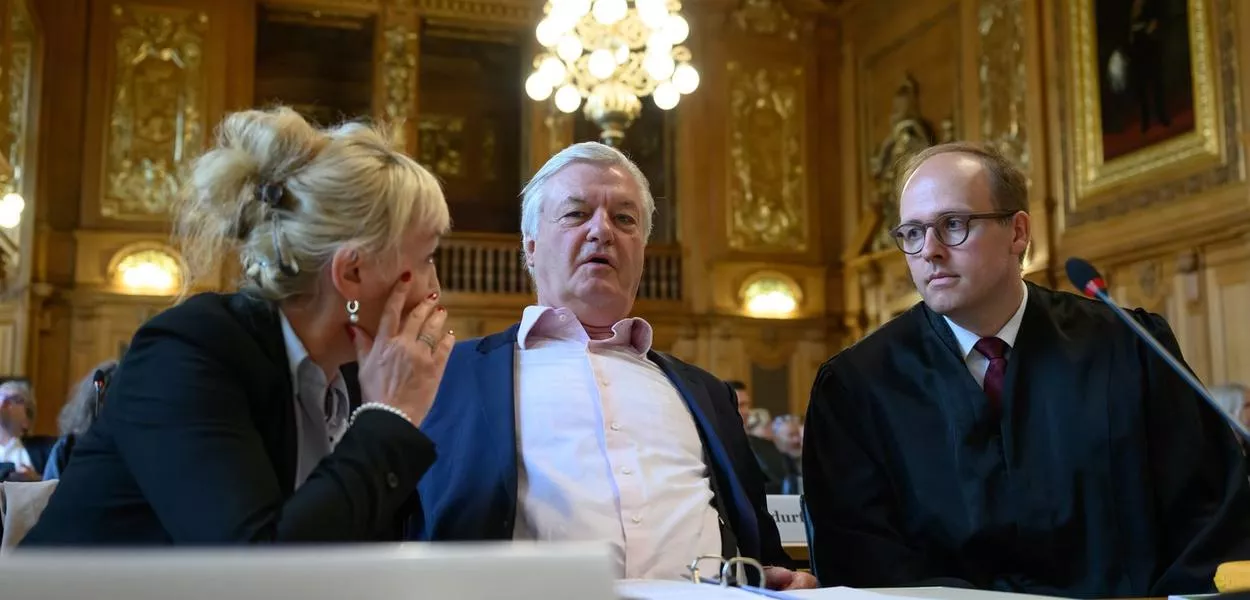
Leipzig, Germany (dpa) – A German court is debating whether the previous government was right to ban far-right magazine Compact, a publication classified as right-wing extremist by domestic intelligence.
Then-interior minister Nancy Faeser banned the magazine in July 2024, describing it as the "central mouthpiece of the far-right extremist scene."
But the Federal Administrative Court in Leipzig provisionally suspended the ban in urgent proceedings shortly afterwards, allowing Compact to continue publication for the time being.
The court is now set to hand down a ruling in main proceedings, which kicked off on Tuesday.
Wednesday's hearing centred on the question of whether individual statements made in the magazine should be considered expressions of opinion and therefore be protected by press freedom and freedom of expression, or whether they should be considered anti-constitutional and pose a concrete threat.
Excerpts presented to the court by the Interior Ministry on more than 240 pages include terms and statements including "Passdeutsche" (passport Germans), "Volksaustausch" (great replacement), "Vernichtungsschlag gegen das deutsche Volk" (destruction of the German people) and "Deutscher ist ein Mensch mit deutscher Herkunft" (a German is a person of German origin).
According to the ministry's legal representative Wolfgang Roth, the text passages demonstrate that the makers of Compact are striving for "absolute homogeneity or a rescue of the intercultural identity of the German people".
The defence team has rejected the accusations, describing them as polemics.
The statements made did not reveal any "political concept pursuing an anti-constitutional goal," said lawyer Ulrich Vosgerau.
Judges in Leipzig have scheduled another hearing in the case for Thursday, as it appears increasingly unlikely that a ruling will be made this week.
writer