
Brazil's Bolsonaro rejects coup accusations in court testimony
Did former president of Brazil Jail Bolsonaro attempt to undermine democratic order in trying to overturn the 2022 election results, which saw him lose to his successor, President Luiz Inácio Lula da Silva? A watershed trial has started in Rio de Janeiro trying to establish that very question.
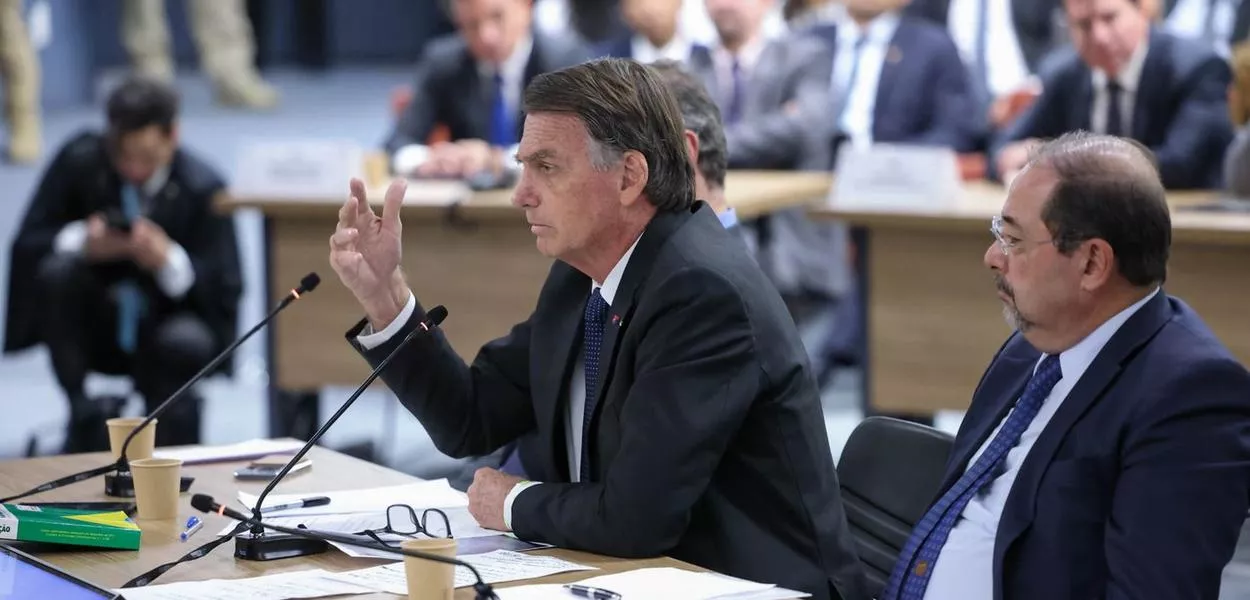
Rio de Janeiro (dpa/AP) - Brazil's former president Jair Bolsonaro on Tuesday denied accusations before the Supreme Court that he had plotted to overturn the 2022 election results and stage a coup against his successor, President Luiz Inácio Lula da Silva.
"There has never been talk of a coup. A coup is an abominable thing," Bolsonaro said during his testimony before the Supreme Federal Court (STF). "Brazil couldn't go through an experience like that. And there was never even the possibility of a coup in my government," he added.
According to prosecutors, Bolsonaro was involved in drafting a decree to impose a state of emergency and was allegedly aware of a plot to assassinate Lula, his vice president and Supreme Court Justice Alexandre de Moraes.
Bolsonaro rejected the allegations, saying he had always stood by the constitution and had no knowledge of the reported assassination plot.
On January 8, 2023 — shortly after Lula took office — supporters of Bolsonaro stormed Brazil's Congress, Supreme Court, and presidential palace in Brasília.
Trial streamed online
The trial began on Monday and includes seven co-defendants, among them former ministers, high-ranking military officials, and former aide-de-camp Mauro Cid. Prosecutors say the group played a central role in an alleged attempt to undermine Brazil's democratic order.
Many Brazilians followed the trial, which was streamed online. The country was shaken by the January 2023 riot in which the Supreme Court, Congress and presidential palace were ransacked. Bolsonaro said in his testimony that the rioters were “crazy," not coup mongers.
The defendants are standing trial on five counts: attempting to stage a coup, involvement in an armed criminal organization, attempted violent abolition of the democratic rule of law, aggravated damage and deterioration of listed heritage.
A coup conviction carries a sentence of up to 12 years. A conviction on that and other charges could bring decades behind bars. A verdict is expected in the second half of the year.
A watershed trial
Thiago Bottino, a law professor at the Getulio Vargas Foundation, a think tank and university, called the trial historic.
“It’s the first time we see people accused of an attempted coup are being subjected to a criminal trial, with the guarantees of due criminal process, being able to defend themselves but answering for these accusations,” he said.
The trial is particularly significant in light of the fact that Brazil's constitution was adopted in 1988, less than four decades ago, Bottino said.
Brazil is showing that it has “the democratic maturity to be able to use due process to investigate this type of accusation and, if necessary, hold those responsible accountable,” he said.
writer